Ambition
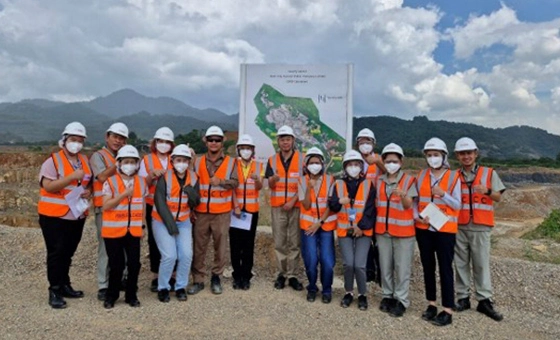
SCCC Group is committed to creating a Net Positive Impact (NPI) on biodiversity by 2030.
Biodiversity Strategic Missions and Target Setting for Group Sustainability
The Board of Directors fully respects the natural capital, which is critical to doing business in a sustainable manner, and sees the importance of monitoring and tracking operations of all levels to ensure, with strategies in place to promote the achievement of such a goal, the Group’s business operations are truly environmentally and socially responsible.
In 2020, the Board of Directors considered and approved 5 sustainability targets of the Group, with “Biodiversity and the Significance of Water” being one of such targets. As well, the Board of Directors approved the adoption of relevant Key Performance Indicators (KPI) including net positive impact to biodiversity within 2030 with the baseline year being 2020, with all businesses in all countries that operate mines being mutually responsible for this KPI.
Biodiversity Disclosure Scope of the Group
Disclosure of information pertaining to biodiversity, as well as the use of “the Group” in this context, cover only Group Companies that deal in the cement production business, which operates mines as part of the production processes. This include such Group Companies in Thailand, Vietnam, and Sri Lanka, excluding a Group Company Bangladesh which only operates a cement production plant.
Strategy
The Group implements its biodiversity strategy by systematically applying the Mitigation Hierarchy, with a strong emphasis on preventing and responsibly managing impacts in a prioritized and structured manner, as outlined below.
Avoid
Prevent and avoid biodiversity impacts from the earliest planning stage, such as defining buffer zones and avoiding environmentally sensitive areas.
Minimize
Reduce unavoidable impacts through strict operational controls, compliance with environmental measures, and continuous monitoring.
Rehabilitate
Restore affected areas through mine rehabilitation, reforestation, and ecosystem restoration in accordance with EIA requirements.
Offset
Apply biodiversity offsetting as a last resort to address residual impacts that cannot be avoided or rehabilitated, guided by expert recommendations.
Collaboration with International Union for Conservation of Nature (IUCN)
The implementation of the mitigation hierarchy is supported by expert guidance from the International Union for Conservation of Nature (IUCN). INSEE has entered into regional and country-specific Memoranda of Understanding (MOUs) with IUCN for the period 2021–2024.
These MOUs cover:
- Locally tailored biodiversity frameworks aligned with site-specific contexts
- Site-specific action plans and roadmaps to guide implementation
- Guidance for the development of Biodiversity Action Plans (BAPs), encompassing both site-level measures and broader, strategic initiatives
Performance and outlook
Assessment of Critical Habitats and Biodiversity Risk Management
To prepare reports on the environmental impacts by mining, government registered experts are fully involved in data collection and field survey. Collected data include species of plants and animals found in the project areas, and the coverage of assessments include the assessment on potential impact to the environment and wildlife in the operation areas during the projected operation timeline in financial terms. As well, measures to reduce, control, and prevent potential impact are reviewed by government agencies.
Environmental impact assessment reports are a requirement for all new mining concession proposals and concession renewal applications, and as such the Group is proactively conducting annual self-assessments jointly with associated academics, with external experts employed to conduct perdiodical reviews, to ensure measures according to the restoration work plan are executed efficiently and that appropriate improvements are made where needed.
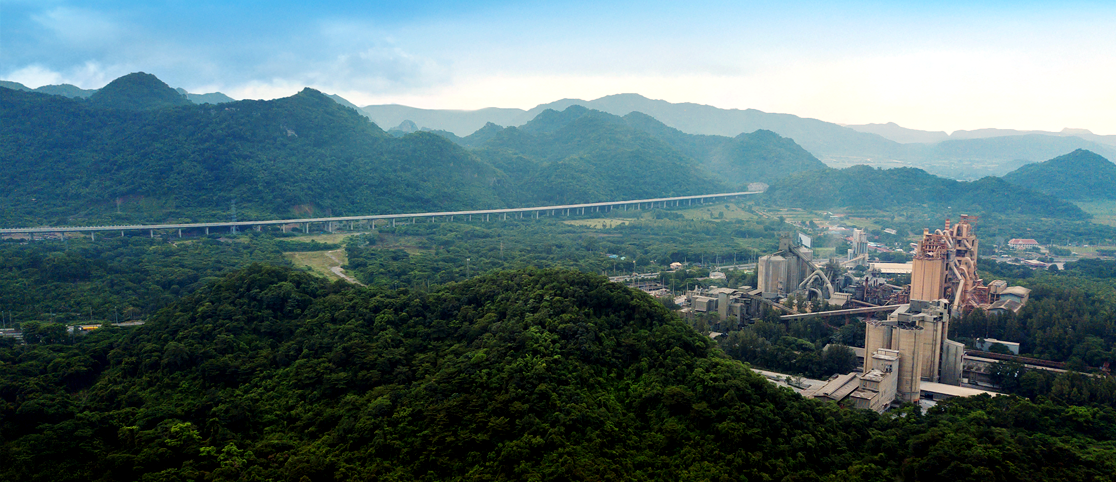
Our mining operations are mountaintop mining, which requires only deforestation of the operation areas and utility areas at the centre of the operation areas, with surrounding areas being excluded, to act as buffers and to reduce environmental impact. Continued mining operations will only see the same operation areas being slightly expanded. Our mining operations are accompanied by the area restoration plan, which aims to rehabilitate the affected areas and restore them to as close to their natural state as possible. Limestone mines in Thailand are located in Saraburi, in mountainous areas, covered in mixed deciduous forests, with buffer zones surround the mines nearly as large as the mining areas themselves.
Mitigation Hierarchy.
The Company manages environmental impacts in accordance with the Mitigation Hierarchy, prioritizing avoidance, minimization, rehabilitation, and offsetting to ensure responsible environmental management.
| Mitigation Hierarchy | Target | Actual Performance 2024 |
|---|---|---|
| Avoid | Prevent deforestation in buffer zones (Zero deforestation) | No deforestation occurred |
| Minimize | Operate strictly within pit area and comply with all legal requirements | Full compliance achieved |
| Rehabilitate* | Rehabilitate 5.875 rai per year in accordance with EIA | 377 rai rehabilitated |
| Tree planting in rehabilitated areas | 32,646 trees planted | |
| Nursery development of 50 plant species by 2030 | 40 planted species | |
| Control invasive species (Leucaena leucocephala) | On track as planned | |
| Offset | Collaborate with communities, government agencies, International Union for Conservation of Nature (IUCN), and relevant partners. | On track as planned |
Remark: *The limestone quarry area is part of the production process in Thailand.
For biodiversity offset projects, the Group collaborates with the communities, related government agencies, and the IUCN and other such similar organizations in the forestation of areas surround our plants, as well as in other plant and wildlife preservation projects. As an example,
- In Sri Lanka, the Group has initiated a project to restore mangrove forests negatively impacted by fishery and tourism. As part of the project, in collaboration with the Wildlife and Ocean Resource Conservation (WORC,) the Group has planted 1,500 mangrove trees, and 1,500 other plants around the Thalathuduwa and Kurulu Duwa islands, with the outcome of this project continuing to be tracked by WORC. Another example is the restoration project for coral reefs adversely affected by the En-nino effect, which sees the surface temperature of the Central Pacific Ocean and the near-equator area of the Eastern Pacific Ocean rising to an abnormal degree, with the project aiming to create an infrastructure for coral and species of fish’s habitation and reproduction. The project is currently under monitoring by the Sri Lanka Navy and the IUCN.
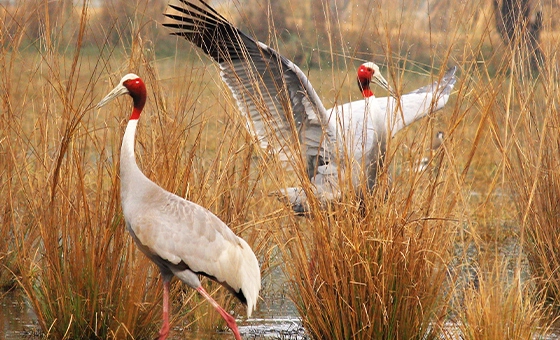
- In Vietnam is our sarus cranes conservation program in the Binh Tri and Phu My areas.
Details of our Sri Lanka and Vietnam subsidiaries’ collaboration with IUCN can be found in the below links
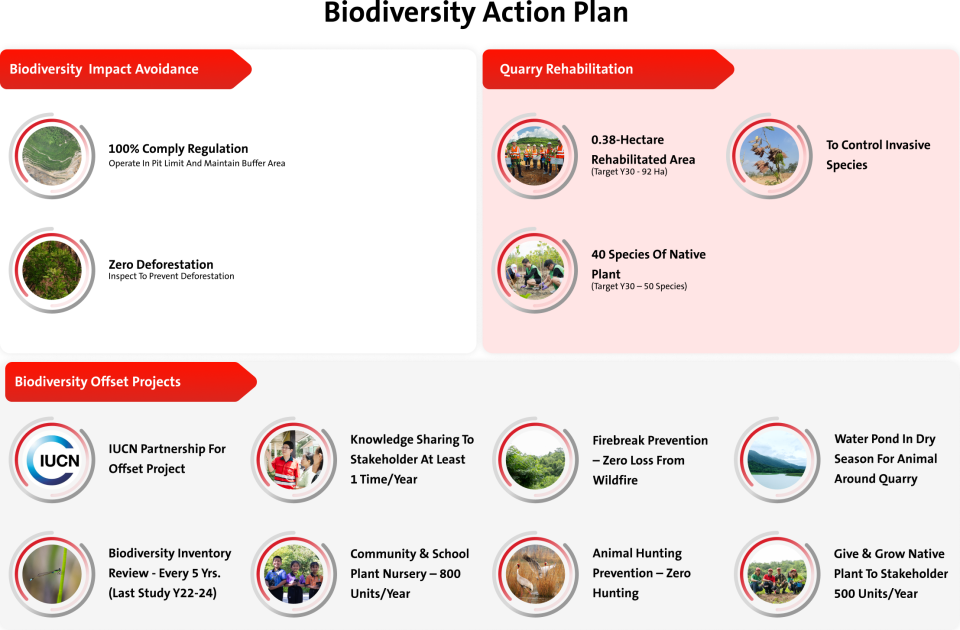
The mining area restoration fund – The Group fully supports the restoration of operation areas after mining is concluded, annual mining and restoration plan available, prepared in collaboration with experts from Kasetsart University with extensive and ongoing surveying and research in the areas’ biodiversity to ensure the areas are restored to as close to their natural state as possible. Data of wildlife and plant species is collected and analyze, acting as a base of scientific information for which we use in managing the restoration areas. The Company also tracks the growth of planted trees as part of this project, to assess the effectiveness of the restoration. The data we collect is used for habitat restoration, preservation of plants and wildlife, and ecosystem preservation. The result of this project not only helps with more effectively restoring the areas, but also reflects the Company’s progress in creating a positive impact towards biodiversity, and our commitment to achieve net positive impact by the year 2030.
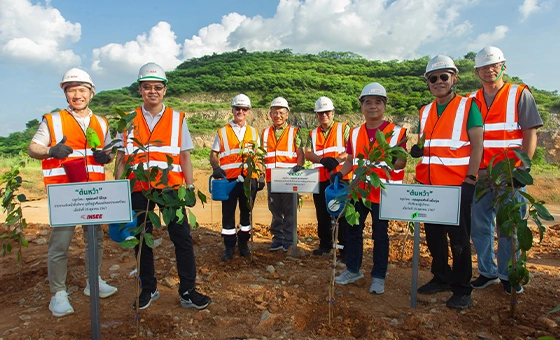

Seedlings project – The Group has surveyed the buffer areas and has found that there are more than 100 local species of plants in such areas. We have gather seedlings of the local species from these areas for propagation in the established plant nursery, which are then ised as part of the conservation and restoration of loca plants in the areas to return them to as close to their natural state as possible. The resultant plant seedlings from the nursery are also used in other coporate social responsibility programs with communities surrounding the areas. The Company’s target is to propagate at least 50 species of local plants by the year 2030. In 2024, over 40 species of local plants have been propagated. The Company also consistently minitors and controls invasive species of plants found in the areas, to ensure they are contained and their impact to biodiversity is minimized.
Give & Grow project – The Group collaborates with the relevant government agencies and organizations for the offsite tree-planting initiative, which is aimed at restoring the ecosystem and promote diversity on a wide scale. The Company provides seedlings from the Company’s nursery to said agencies and organizations both national and local for planting and restoring areas, with the target being 500 seedlings provided annually. In 2024, the Company provide more than 900 seedlings, with collaborations being made with the Navaminda Kasatriyadhiraj Royal Air Force Academy, the Chet Kot-Pong Kon Sao National Park, and local communities in the Thap Kwang subdistrict, Kaeng Khoi district, Saraburi. This coordinated effort with the agencies and local communities reflects our role in being a driving force behind the conservation of natural resources and lessening of the negative impact to biodiversity, which pave way to sustainability for the communities and the country.

The seedlings for communities and schools project – The Group promotes participations in conservation and restoration of biodiversity in the operation areas by the local communities and schools through the communities and schools seedlings project, an activity which sees a total of 800 seedlings being planted annually. The project encourages participation and building the sense of community pride in the people of the communities and the local students, as drivers of the restoration and sustainable conservation of the ecosystem.
- Communities seedlings – The Group buys seeds from the local communities which are then nursed into seedlings for use in restoring the mining areas. This provide the communities with additional income, and involves the communities directly in the conservation and restoration of natural resources.
- Schools seedlings – The Group provide small seedlings from the nursery to local schools, such as the Thap Kwang Kindergarten, and encourages students to care for and learn about the plants and conservation of nature. Grown seedlings are collected by the Company for further use in mining areas restoration.
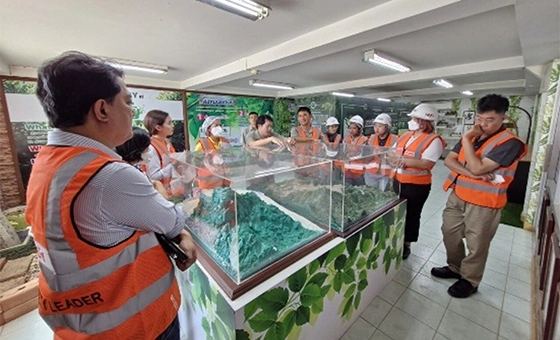
Stakeholders knowledge sharing – The ecology classroom activity is created to provide knowledge and information on biodiversity in the Saraburi quarry and the surrounding areas. An Open House activity is also arranged for the local communities and schools, to promote the awareness of and participation in conserving biodiversity and community participation.